
Include multiple voices
Strategy for Our Times Part 8

Effective planning for the future requires the wisdom and varied perspectives of many people. Planning provides a special opportunity to reach out to constituents and listen to their input. Here are some practical tips for developing and implementing an community listening plan.
What feedback have you already gathered? As you think about giving voice to constituents, consider what information you already have at hand. Have you surveyed clients recently? Have you conducted a staff climate survey or a board survey? Have you completed a needs assessment? This information, if not too dated and if thoughtfully gathered, can and should be used to inform your planning process.
Map out who your key constituents are. Think about the types of people you would like to connect with and how best to consult them during a planning process. Thoughtful constituent listening includes the people served by your nonprofit, the people who care about your work (donors, volunteers), and partners (program partners, key referral sources, funders). Input can be collected via a survey, focus groups, individual interviews, or special events. Here is a sample outreach plan for a food bank with a number of potential constituent groups and sample strategies.
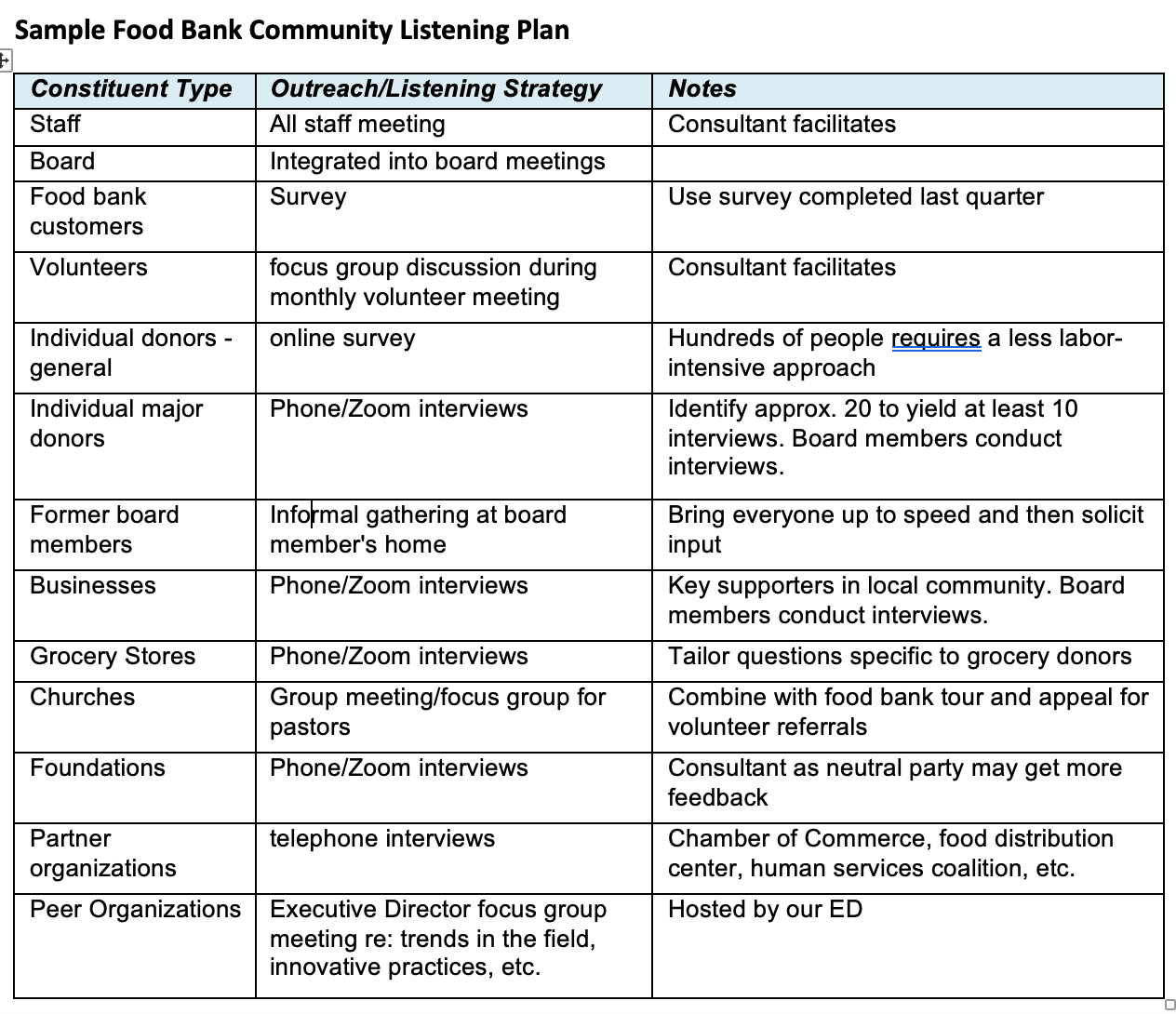
Image description: Table with three columns: Constituent type, Outreach/Listening Strategy and Notes. DM for text copy if needed.
Reflect on voices that may be missing from your outreach plan. Does your organization aspire to serve a particular community, but they are currently not well-represented in your client base? Have you considered expanding into a new neighborhood but don’t yet have a lot of input from residents there? As you consider how to incorporate new voices, make sure that you are taking the time to engage the target community effectively and that your event is accessible. Do you need language interpretation or childcare? Do you have relationships with a few people in the community who will encourage others to participate? This process takes work and may be humbling. Without it, you are unlikely to successfully serve new audiences.
Be realistic about your listening activities and document them well. The amount of listening you can do will be affected by your budget and time available. Once you have mapped out potential community engagement and listening activities, prioritize among the possible strategies as needed. And remember to include the time to analyze and report back to decision-makers on the information you collect—it can’t inform planning if it isn’t shared.
Report back to constituents. What did you learn? How did you use the information your constituents shared with you? Circling back to share with constituents how their input made a difference is key to building trust and thanking them for their effort.